
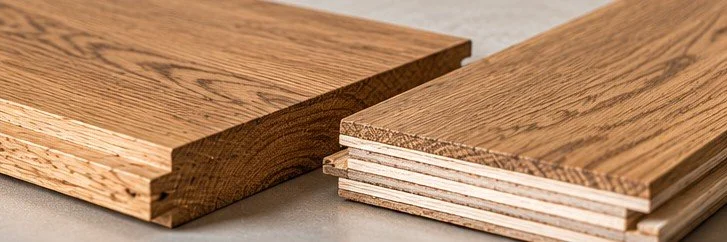
Understanding Wood Flooring
A Practical Guide to Solid and Engineered Wood Floors
Real wood flooring offers natural character, warmth and longevity, but not every wood floor is constructed in the same way.
This guide explains the difference between solid and engineered wood flooring, how each is made and the important considerations when choosing the right floor for your home.
What Is Real Wood Flooring?
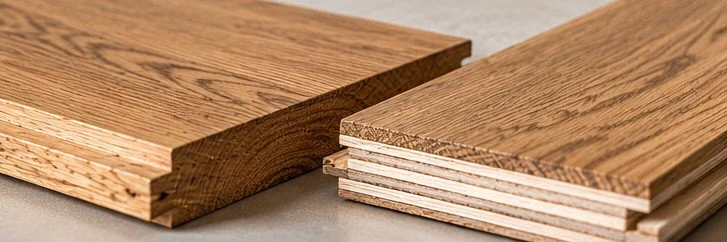
Real wood flooring has a genuine timber surface, so every board carries its own natural grain, colour and character.
Two of the most common constructions are solid wood and engineered wood. Both offer the appearance and feel of real timber, but they differ in how the boards are made and how they respond to changing conditions.
Unlike printed wood-effect flooring, the visible surface of a real wood floor is actual hardwood. Depending on its construction and remaining wear layer, a wood floor may also be suitable for sanding and refinishing in the future.
Solid Wood Flooring
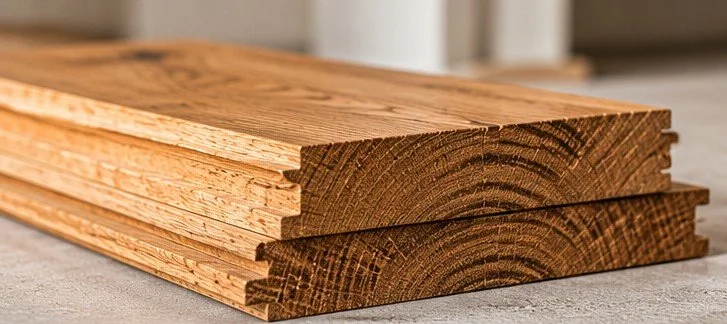
Solid wood flooring is manufactured from a single piece of timber throughout the board’s thickness.
It is valued for its traditional construction, natural character and long service life. Many solid wood floors can be sanded and refinished multiple times, although this depends on the board profile, condition and remaining usable timber.
Because solid wood responds to changes in temperature and relative humidity, careful consideration must be given to moisture conditions, installation methods and the environment in which it will be fitted.
Key characteristics:
• One piece of timber throughout
• Authentic hardwood appearance and feel
• Potential for future sanding and refinishing
• Requires suitable environmental and subfloor conditions
Engineered Wood Flooring
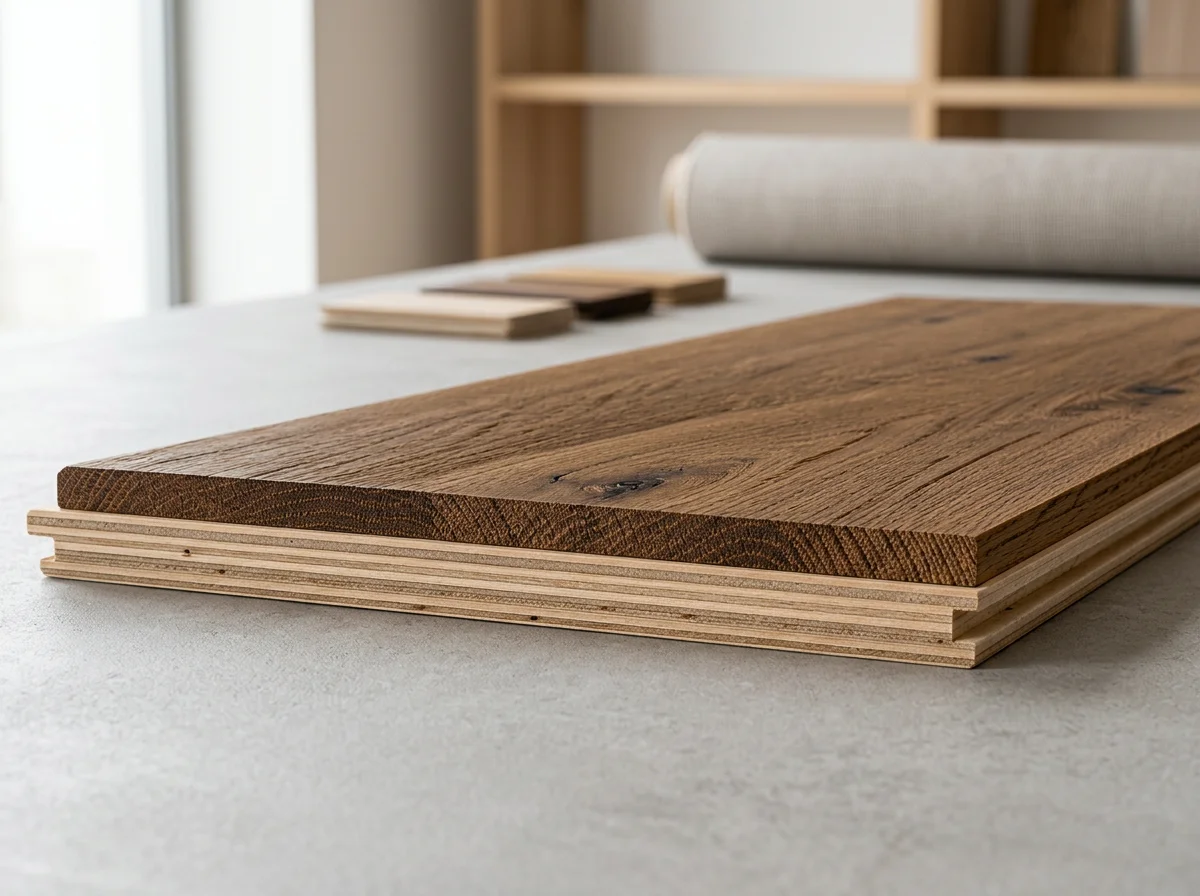
Engineered wood flooring has a genuine hardwood top layer bonded to a supporting core made from multiple layers or other engineered wood materials.
The construction is designed to improve dimensional stability compared with a similar solid timber board, helping reduce movement caused by normal changes in humidity. Engineered wood is still a natural timber product, however, and is not immune to moisture or unsuitable site conditions.
Engineered floors are available in different overall thicknesses, wear-layer depths, widths and finishes. Depending on the product, installation may involve floating, glue-down or mechanical fixing.
Key characteristics:
• Genuine hardwood surface
• Multi-layer construction
• Generally greater dimensional stability than solid wood
• A range of thicknesses and installation methods
• Some products can be sanded and refinished, depending on wear-layer thickness and condition
Solid vs Engineered Wood Flooring
Neither construction is automatically the best choice for every project. The right option depends on the subfloor, room conditions, installation requirements and the appearance you want.
Solid Wood
Feature
Engineered
More responsive to changes in humidity.
Stability
Generally more dimensionally stable, but still affected by moisture.
Often offers substantial sanding potential, subject to board condition and profile.
Refinishing
Depends on the thickness and condition of the hardwood wear layer.
Hardwood top layer over a supporting core.
Construction
One piece of timber.
Floating, glue-down or mechanically fixed options may be available, depending on product.
Installation
Secret nailed or glued down.
Many products are suitable, subject to manufacturer limits and installation conditions.
Underfloor heating
Often more restricted; only use products expressly approved for the system.
Choosing the Right Wood Floor
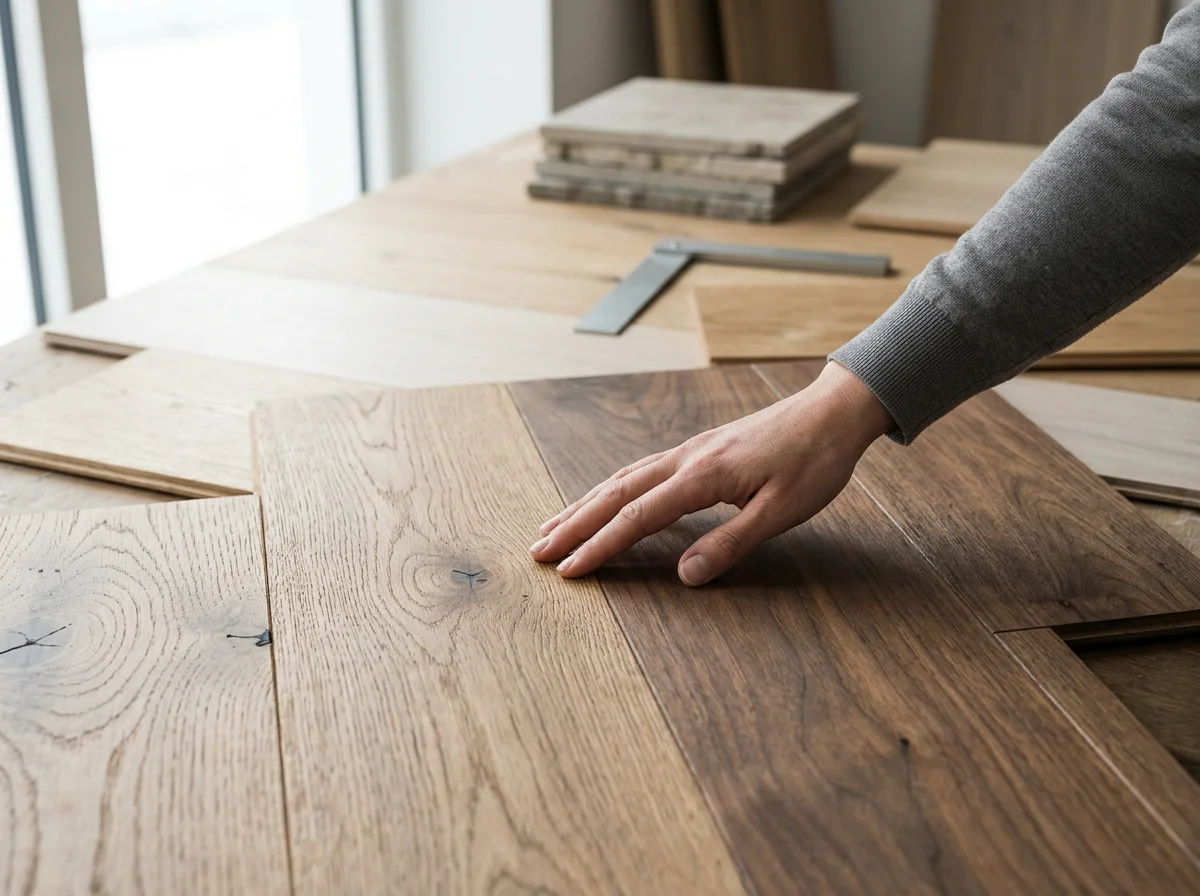
Before selecting a floor, consider more than its colour or price.
Subfloor conditions
The subfloor needs to be appropriately prepared, sufficiently flat and within the flooring and adhesive manufacturers’ moisture limits.Room environment
Temperature and relative humidity influence timber movement. Wood flooring needs a suitable and reasonably stable indoor environment.Underfloor heating
Check that the specific flooring is approved for your heating system, and follow the manufacturer’s temperature, commissioning and installation requirements.Surface finish
Lacquered, oiled, brushed and stained floors can look and perform differently. Consider maintenance requirements alongside appearance.Long-term maintenance
Think about everyday wear, cleaning, potential repairs and whether future refinishing is important to you.
Explore Our Wood Flooring Collections
Now you understand the main differences between solid and engineered wood flooring, explore the available styles, constructions and finishes to find a floor that suits your project.